Start with an observed opponent pattern, then choose a manageable response. This is an opponent-review workflow, not a verified catalogue of every Opposition Instructions control.
Reviewed against sources available on 11 November 2026. Game status, player snapshots and screenshot versions are separate; see each source and image caption.
Make the opponent brief small enough to use
Read the opponent information and relevant reports available in your save, then choose a pattern you expect to matter. It might concern a route of progression, a receiving player between lines or the space left after an attack. Record the evidence and its limitations rather than treating a reputation or an old match result as a complete current scouting report.
Compare that pattern with your own squad’s responsibilities. Identify the player who would carry out the response and the cover they would need. An opponent-specific adjustment is useful only if your available players can perform it without opening a more serious weakness elsewhere. Keep your ordinary plan available so the intended difference remains clear.
Connect the response to preparation and availability
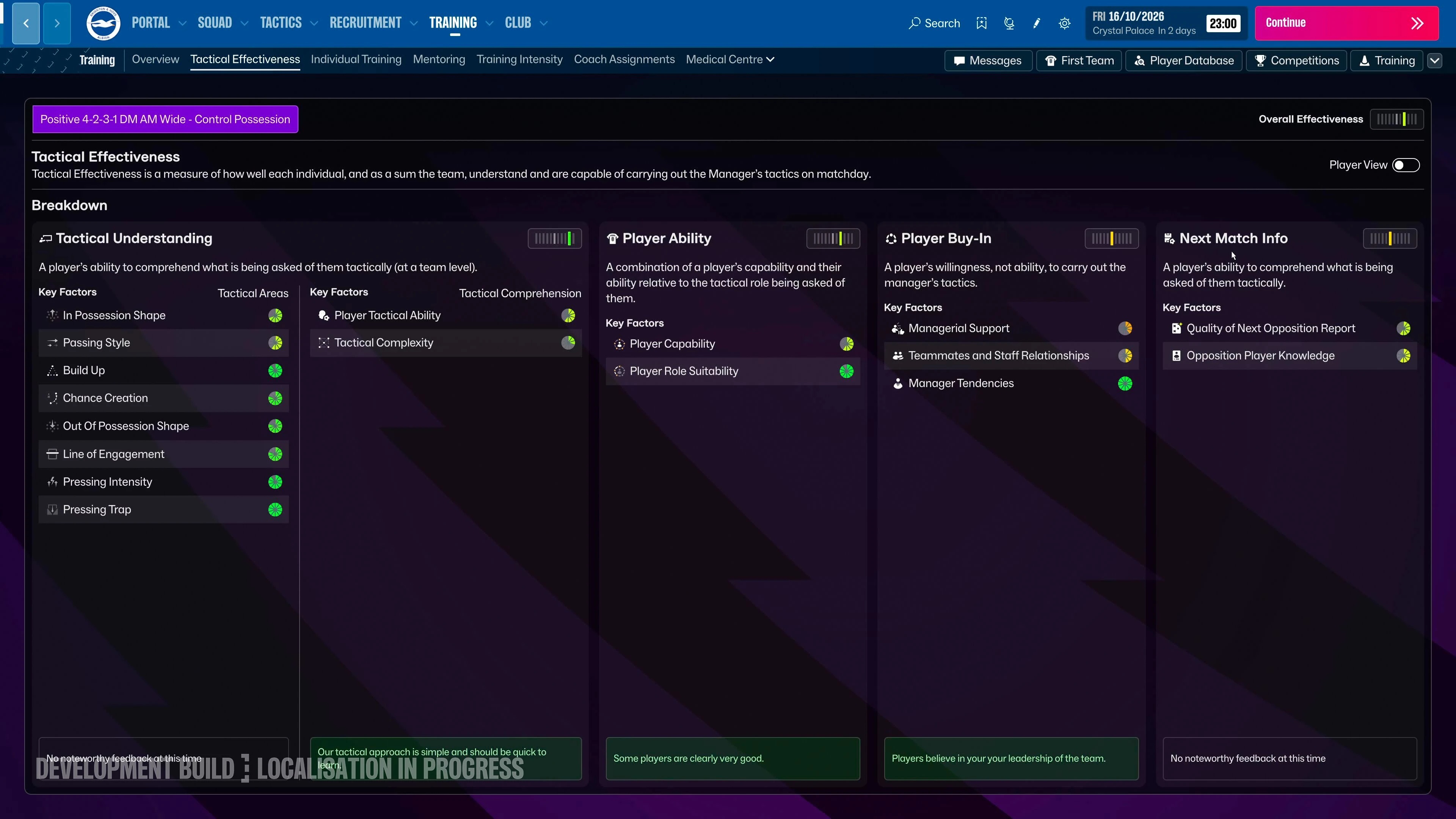
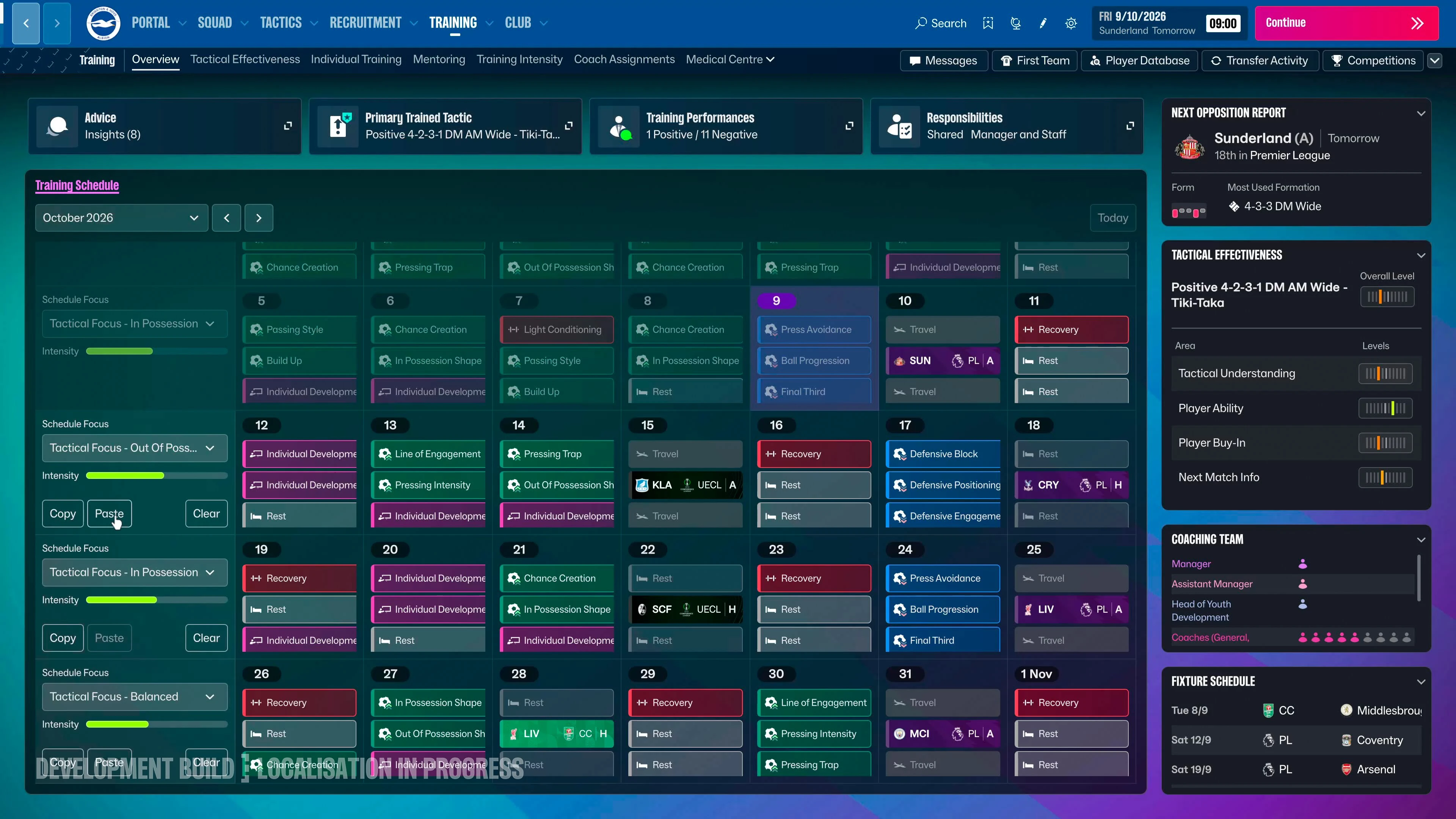
The official system places Next Match Information within Tactical Effectiveness. Use that connection to ask what the team still needs to understand before the fixture. Check the relevant preparation and the players who are actually available rather than applying an instruction solely because it would be attractive with a different squad.
For Opposition Instructions, read the controls, tooltips and staff advice shown in your current build before applying a change. We have not independently verified a complete FM27 opponent-instruction menu, so this guide does not invent a click path or automatically assign tight marking, tackling or pressure settings to every opponent position. Keep the observation and the chosen instruction in separate columns.
| Evidence | Decision to consider | What to watch |
|---|---|---|
| Repeated receiving space | Which existing duty can reduce it? | Does the response expose another channel? |
| A dangerous progression route | Can the nearest support interrupt it? | Does the opponent simply switch routes? |
| A weakness after their attacks | Is a suitable outlet available? | Can your team reach it with support? |
| Incomplete report | What still needs observation? | Avoid treating a guess as a confirmed weakness |
Review the response while the game state changes
Watch the next relevant passages of play rather than judging the adjustment only by the score. Record whether the targeted pattern became less common and what happened to your own transition cover. If an opponent changes shape or personnel, reassess the brief; a useful first-half response may no longer address the second-half problem.
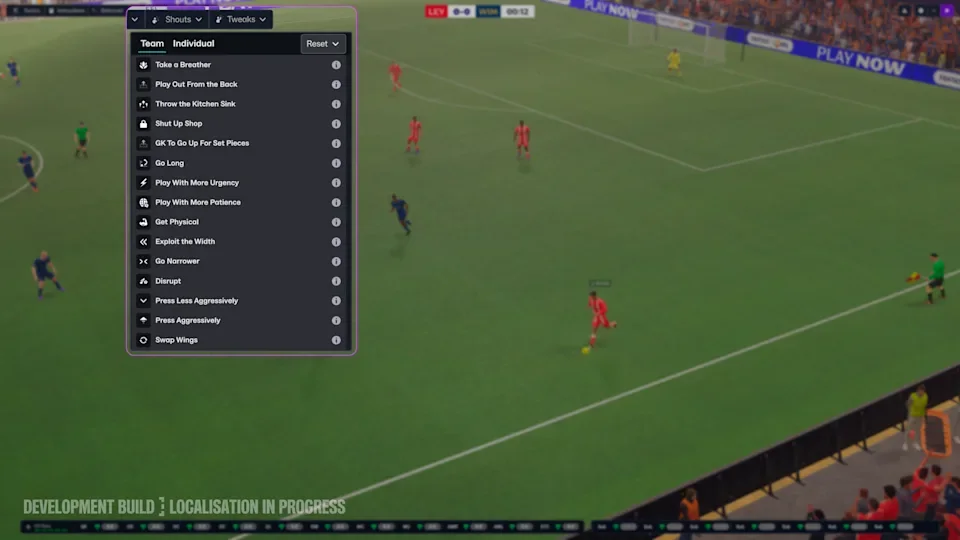
Tactical Tweaks can remain active until deselected, so include a point at which to inspect whether the temporary response is still needed. Keep the game version, starting plan and changes in the observation log on the tactics page. Those user notes are not controlled wiki tests, and this guide claims neither a tested win rate nor a universal opponent-instruction preset.
Select one opponent pattern
Record the report or match evidence behind it.
Check your available response
Identify who performs the job and who covers the resulting space.
Inspect the actual control
Use the current build’s descriptions; leave unverified controls out of the plan.
Review and remove
Check whether the reason for a temporary adjustment still exists.
First match: from selection to a useful review
Use the pre-match period to turn your ordinary plan into a selection you can explain. Confirm availability and competition eligibility in this save, select a starter for each responsibility and keep substitutes for the changes you may need. A public position code is a shortlist aid, not proof of match readiness. Check the opponent report and leave time to resolve a blocking decision before progressing.
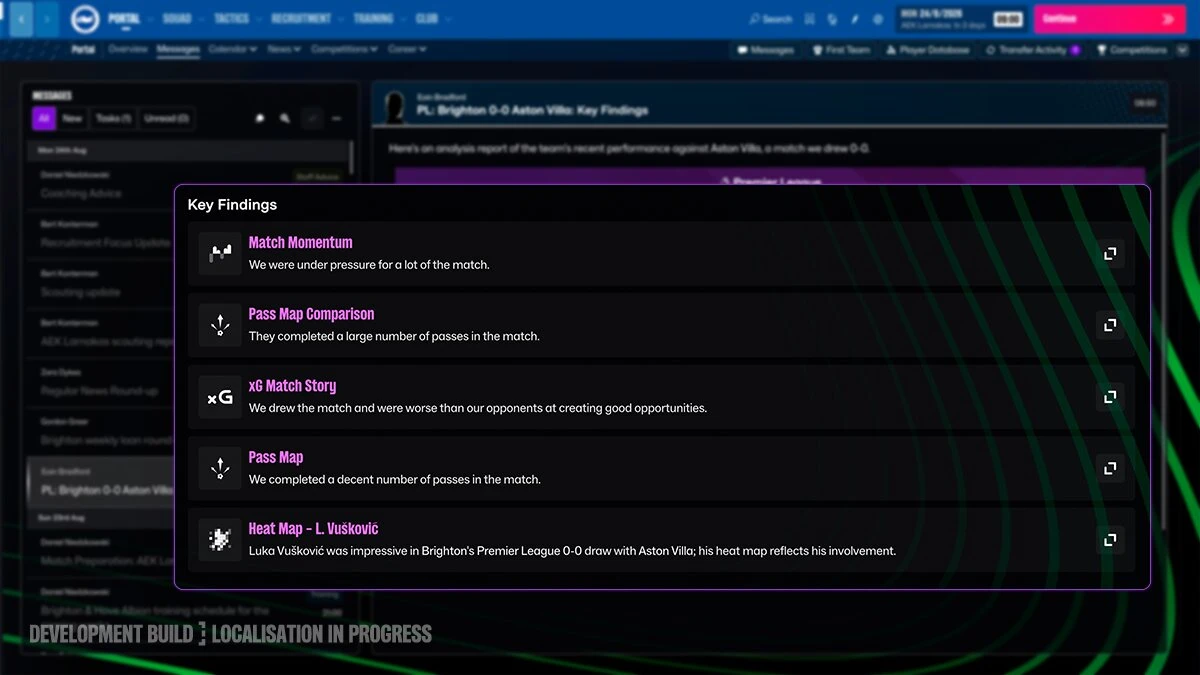
During the match, follow one question: for example, whether the player behind your advanced wide defender still protects the channel. Observe several relevant passages before reacting to one highlight. Change one responsibility or one clearly understood tweak, then watch for the consequence. At the interval, compare the planned job with what actually happened. After full time, use Key Findings and replay evidence to retain or revise one decision; record the game version and unusual events. This routine does not require winning the first friendly to be useful.
Before selection
Read eligibility, availability, next-opponent information and any outstanding messages.
Before kick-off
Check the starting eleven, bench cover and who protects possession losses.
During play
Observe the named pattern; apply only a response you understand and review it.
After full time
Record a chance pattern and one justified next action, keeping the original plan.
Opposition instructions: target a repeated problem and check the cost
Use this when the opponent repeatedly creates the same threat, not simply because one player has a high reputation. Official FM27 material confirms that opponent instructions contribute to Tactical Complexity. It does not provide a verified complete release-menu path or justify a universal instruction on every opponent. The match-day Tweaks control is a separately documented tool, not a substitute name for the opponent panel.
If a wide receiver repeatedly has time to turn, inspect the nearest defender, midfield support and the space left behind before changing a demand. A sensible intervention may still fail if the player cannot reach the target or the instruction opens a more dangerous route. Keep one change and its observation together.
Locate the recurring action
Read the opponent report and examine more than one comparable passage. Record the receiver, zone and action causing the problem.
Find the player responsible
Check who can respond in your own shape and what cover that movement removes. Separate a structural gap from an individual decision.
Choose an available intervention
Use only controls visible in your installed edition and read the selected setting. Avoid assigning a large bundle before you can explain its responsibilities.
Observe and reassess
Check the next relevant passages, including a counterexample. Recheck after a substitution, positional switch or shape change.
Retain or undo with a reason
Keep the change if the original danger is reduced without a worse exposure. Otherwise adjust or remove it and record why; a goal alone is not a test result.
| Observation | Question before changing anything | Follow-up |
|---|---|---|
| Wide receiver turns freely | Can the nearest defender engage without exposing the inside lane? | Watch the next comparable reception and the space behind. |
| Central passing route remains open | Is the gap caused by the shape or the player assigned to close it? | Recheck the receiving options after the intervention. |
| Opponent substitutes the target | Does the new player occupy the same role? | Reassess the target rather than keeping an outdated demand. |
| Your team loses central cover | Which movement created the exposure? | Reduce the conflicting demand before adding another one. |
| Too many instructions are active | Which instruction answers the original evidence? | Simplify and review Tactical Effectiveness feedback. |
Release-version review: keep the blueprint and evidence separate
These formation and decision examples remain editorial blueprints, not release-version match tests. Keep the current Build, team, instructions, opposition and observations with any comparison. There is no supplied controlled test establishing a winning preset or a new advantage for one of the four formations.
Read the Day 0 record for the limited launch fixes and the separately labelled later-November plan. A role-description correction does not establish changed role behaviour. Planned defensive or attacking work must not be described as already released. Revisit the affected passages only when new official notes or a documented test provide evidence.
Day 0: keep forced injury changes separate from tactical choices
The launch notes repair cancellation of a forced injury substitution that could leave a side with ten players. If the game requires an injury change, complete the replacement and recheck shape, eligibility and cover before evaluating your tactical adjustment. The notes do not document new opponent-instruction presets or guarantee parity across editions.
Opposition instructions: choose a response you can explain
An editorial observation-to-action worksheet. The complete FM27 Opposition Instructions menu has not been independently captured, so this does not invent toggle names or a universal preset.
Write one repeatable opponent pattern
Record where the move starts, the player receiving the next pass and the space attacked. Separate a repeated pattern from a single highlight or an old reputation.
Assign ownership of the response
For an overload outside your full-back, decide who can help without abandoning the centre. For a receiver between your lines, identify who can close the space and who covers behind. These are questions for the current personnel, not automatic instructions to press everyone.
Read the available instruction and its cost
In the actual save, inspect the relevant opposition and team settings before choosing a response. If the control or effect cannot be confirmed, record the intended behaviour rather than pretending a particular button exists.
Review after the opponent changes
Watch whether the original passing route remains open and whether your response creates a worse gap. Remove the instruction if the targeted player moves or the original pattern disappears. Keep the observation with the fixture and version.
- A favourite opponent foot or role label is not enough evidence for a blanket response.
- More instructions are not automatically better preparation.
- Do not turn a community tactic or an editorial example into a claimed wiki match test.
System source: Official Tactical Tweaks and Match Engine deep dive. The steps are editorial unless explicitly attributed. This review adds a workflow; it does not redate unrelated older source records.
Sources & verification
Article reviewed on 11 November 2026. Each source has its own verification date. Guidance is editorial analysis unless explicitly attributed to an official announcement.
- Official sourceOfficial FM27 Training and Tactical Effectiveness deep diveReviewed 11 November 2026
- Official sourceOfficial FM27 Tactical Tweaks and Match Engine explanationReviewed 2 November 2026
- Official sourceSports Interactive — FM27 is live across platformsReviewed 11 November 2026
- Official sourceSI Community Team — launch notes and first post-launch planReviewed 11 November 2026
- Official sourceOfficial FM27 — negotiation advice, loan reports and board feedbackReviewed 11 November 2026
- Official sourceSEGA — Day 0 Patch NotesReviewed 11 November 2026